✕ Home About Services Portfolio Blog Contact Free Consultation
All Services ⚡

Web & Digital Presence

Website Speed Optimization

Website speed optimization for New Jersey businesses with slow, frustrating pages. We find what's holding your site back, fix it and show you the before and after numbers, so more visitors stay and get in touch.
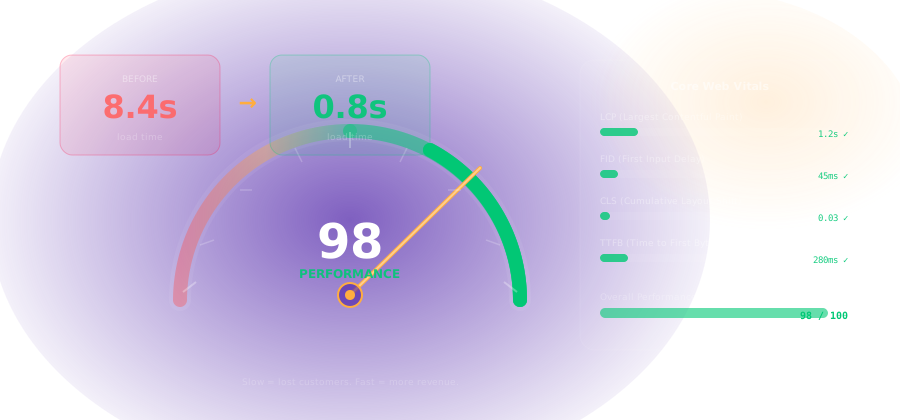
Website speed optimization illustration with a performance gauge, before and after load times and Core Web Vitals readings

What We Deliver

Website Speed Optimization for New Jersey Businesses

Picture a homeowner in Clifton with a leaking water heater. She searches on her phone, taps your listing and waits. The screen stays blank, so she hits the back button and calls the next plumber instead. You never even knew she was there. That's the quiet cost of a slow site, and it plays out on phones every day.

Our website speed optimization service fixes that problem at the source. First, we measure how your pages load for real visitors on real phones. Then we track down the specific causes, such as oversized images, bloated plugins, heavy scripts or slow hosting. Finally, we fix them in order of impact and retest, so you can see exactly what changed.

Man in glasses working on a laptop at a white desk in a bright, minimal room
Get a Free Consultation

No commitment. Just a real conversation about your goals.

Our Approach

How Website Speed Affects Your Leads and Ad Costs

Speed isn't just a technical score. It shapes whether people stay, trust you and take the next step. In fact, Google's Chrome team has published case studies on the business impact of faster pages. For example, Vodafone Italy improved a key loading metric by 31% and saw 8% more sales. Those are big brands, of course, and your results will depend on your site. Still, the lesson holds: faster pages give people fewer reasons to leave.

Speed matters for paid traffic, too. Google Ads builds Quality Score from three parts, and landing page experience is one of them. So if you pay for clicks that land on a sluggish page, you're working against your own budget. A quick page, on the other hand, gives every visitor a better first impression, whether they came from an ad or a search.

For service businesses, the stakes are simple. Most leads arrive through a phone tap or a contact form. If the page stalls before either one appears, that lead is gone. Our guide to turning more visitors into paying customers covers the rest of that journey.

Close-up of a laptop screen displaying program code

Core Web Vitals, Explained in Plain English

Core Web Vitals are three measurements Google uses to judge real page experience. According to the official thresholds on web.dev, Largest Contentful Paint (LCP) tracks how quickly the main content appears. It should happen within 2.5 seconds. Interaction to Next Paint (INP) measures how fast the page reacts to a tap or click, and the goal is 200 milliseconds or less. Cumulative Layout Shift (CLS) tracks whether things jump around while the page loads, so it should stay at 0.1 or less. Also, web.dev says to judge these at the 75th percentile of real visits. In plain terms, at least three out of four visits should hit each goal, not just one lucky test.

Google says it highly recommends good Core Web Vitals for success with Search. That said, speed won't rescue a page that doesn't answer the searcher's question. Google's page experience guide notes that Search still aims to show the most relevant content, even when page experience is weak. So we treat speed as one part of a healthy site, alongside solid SEO and useful content. For a deeper look, read our article on Core Web Vitals for local businesses.

What Our Speed Optimization Actually Fixes

Images are the usual suspect. We compress them, resize them for each screen and convert them to modern formats such as WebP. We also lazy load images further down the page, so they don't slow the first view. Next, we tackle the code. That means removing unused CSS and JavaScript, deferring scripts that aren't needed right away and trimming extras like old chat widgets and tracking tags you no longer use.

Then we look at the server side. Slow hosting, missing caching and no content delivery network (CDN) can all add delay before anything appears. We fix what we can directly, and we tell you plainly when a hosting upgrade would pay off. Layout shifts get attention too, so buttons stay put while the page loads.

Many local businesses run on WordPress, so we know its common traps well: heavy page builders, overlapping plugins and themes that load everything on every page. We also work on Shopify, Squarespace, Wix, Webflow and custom sites. However, hosted platforms limit what anyone can change. In those cases, we focus on images, apps, embeds and page structure.

Book a free consultation, and we'll show you what's slowing your site down and which fixes matter most.

Book a Free Strategy Call
Statewide Coverage

Faster Websites for Businesses Across New Jersey

Samaroo Solutions is based in northern New Jersey, and we work with businesses across the whole state. Because website speed optimization happens mostly online, distance is never a barrier. Still, we know what local customers expect. They want a site that loads quickly on a phone, whether they're on a train into Hoboken or parked outside a job site in Toms River. Our look at mobile design for business websites covers what else they expect.

Bergen County Essex County Hudson County Morris County Passaic County Sussex County Warren County Hunterdon County Middlesex County Monmouth County Union County Somerset County Mercer County Burlington County Camden County Ocean County Gloucester County Atlantic County Cape May County Cumberland County Salem County
2.5s Google's target for Largest Contentful Paint (LCP)
200ms Google's target for Interaction to Next Paint (INP)
0.1 Google's target for Cumulative Layout Shift (CLS)

What You Get

What Website Speed Optimization Includes

🔍

Website Speed Audit

We test your key pages with tools like PageSpeed Insights and Lighthouse, and we check real visitor data where Google has it. As a result, we fix the actual bottlenecks instead of guessing.

📈

Healthier Core Web Vitals

LCP, INP and CLS are Google's Core Web Vitals, covering loading, responsiveness and visual stability. So we work on all three, which helps your pages feel faster to real people.

💰

More Visitors Who Stay

A faster page gives people fewer reasons to leave before they call, book or buy. In short, you get more value from the traffic you already have.

📱

Real-World Mobile Testing

Fast office wifi hides problems. So we test with slower mobile connections in mind, because that's where many of your customers browse.

🛠️

Any Common Platform

WordPress, Shopify, Squarespace, Wix, Webflow and custom builds are all fair game. Each platform has different limits, though, so we tell you upfront what's possible on yours.

📋

Clear Website Speed Reports

After each round of fixes, you get before and after numbers in plain English. You also see what we changed and why it mattered.


How It Works

How Our Speed Optimization Process Works

01

Measure Your Website Speed

First, we record a baseline for your most important pages on mobile and desktop. That gives us an honest starting point to measure against.

02

Rank the Fixes by Impact

Next, we list every issue and sort it by how much time it costs you. Then we tackle the biggest wins first, so you see progress early.

03

Optimize and Retest

After that, we work through images, code, caching and hosting settings. We also retest after each change, because one fix can sometimes affect another.

04

Verify and Report

Finally, we confirm the results with fresh tests and share a simple before and after report. You'll also get tips to keep the site fast as you add new content.

💡
A fast site won't sell for you. A slow one, however, quietly sends people away before you get the chance.
Let's Talk: Free Consultation

Common Questions

Website Speed Questions We Hear Often

Google's Core Web Vitals set the bar. Aim for LCP within 2.5 seconds, INP of 200 milliseconds or less and CLS of 0.1 or less. Rather than chase a perfect score, we focus on how the site performs for real visitors.
Usually not. Most fixes happen behind the scenes, in images, code, caching and hosting. However, if a change would affect something visible, such as a heavy video slider, we explain the trade-off and ask you first.
It can help, but it's rarely the whole story. Google recommends good Core Web Vitals, yet relevant, helpful content still comes first. In practice, speed often pays off sooner in visitors who stay and get in touch.
It depends on the site. For many small business sites, the main fixes take one to two weeks. Custom builds or sites with lots of plugins can take longer, so we give you a timeline after the audit.
A caching plugin can help, but it rarely fixes oversized images, bloated themes or heavy third-party scripts on its own. In fact, stacking several speed plugins can cause conflicts. So we start with the cause, then choose the right tools.


Ready for a Faster Website?

Book a free consultation, and we'll review your site, explain what's slowing it down and outline a website speed optimization plan that fits your budget.