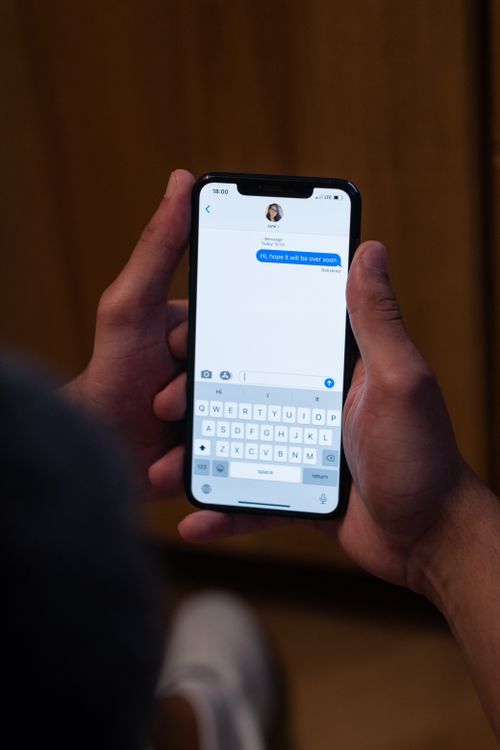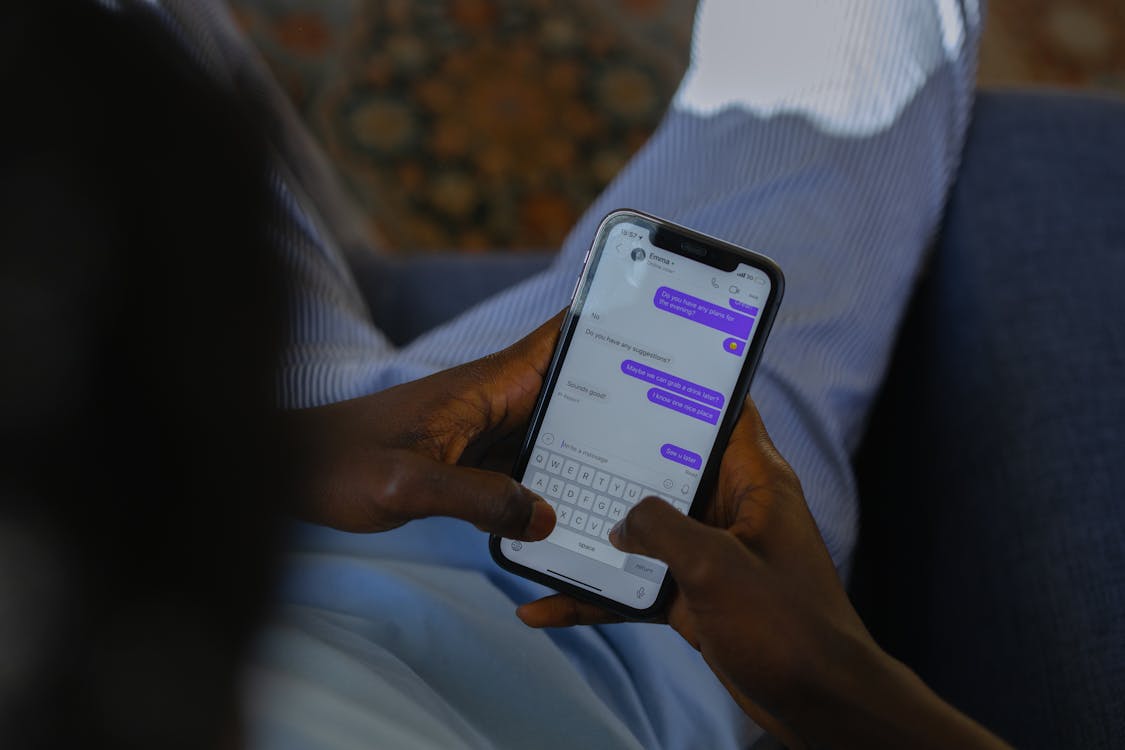
Every service business knows the cost of an empty slot. The hygienist sits beside a clean chair, or your plumber knocks on a door in Clifton and nobody answers. Often the customer isn’t dodging you. They simply forgot. So the most useful SMS marketing for service businesses isn’t a coupon blast. It’s a short run of texts that confirm, remind and rebook.
Texts also work on any phone, not just smartphones. According to the Pew Research Center’s mobile fact sheet, 98% of Americans own a cellphone of some kind.

Why Service Businesses Should Start With Operational SMS
Promotional texts get the attention, but operational texts do the quiet work. A confirmation or reminder solves a problem the customer already has: keeping track of the appointment. So these messages rarely feel like spam. They also pay off in ways you can count, such as fewer wasted trips, fewer empty chairs and fewer “are you still coming?” calls.
Over time, helpful reminders teach customers to recognize your number, so a later rebooking prompt doesn’t come from a stranger. That’s why SMS marketing for service businesses should start with the calendar. Offers can come later.
The Appointment Text Sequence, Step by Step
Each appointment has four moments where a text helps. Pick the ones that fit how you work.
Step 1: Confirm the booking
Send the confirmation within a minute of booking. Include your business name, the date and time (or arrival window), the address and how to reschedule. Also add anything the customer needs to do first. For instance, a heating company might ask the homeowner to clear a path to the furnace. Finally, tell them what comes next: “We’ll text you a reminder the day before.”
Step 2: Remind them at the right moment
Timing matters more than wording here. Send the main reminder early enough that a cancellation still leaves time to refill the slot. With a 24-hour cancellation policy, a reminder at 48 hours gives customers a fair chance to follow it. Then add a short same-day reminder for early appointments or anything booked weeks ahead.
Also, ask for a reply. “Reply C to confirm or R to reschedule” turns a reminder into a head count. Just don’t use CANCEL as a reply keyword. Under FCC rules, that word revokes consent to texts, so someone dropping one visit could end up opted out. Our collection of sample business texts has reminder wording you can adapt.
Step 3: Send an on-my-way text
Customers waiting at home often appreciate this one most. Trigger it when the tech leaves the previous job, with the tech’s first name and a realistic arrival time. It cuts down on “where’s the truck?” calls and lets the homeowner reply with a gate code or a warning about the dog. A photo of the tech is a nice touch, but it turns the SMS into an MMS. Our guide on when to send plain texts and when to add media covers what that switch costs.
Step 4: Prompt the next booking
This is where operational texting turns into revenue. Base the timing on the service interval, not a random date. A salon client who comes every five weeks should hear from you around week four. Similarly, a furnace customer needs a tune-up prompt before the first cold snap.
Keep it to one clear ask with a booking link. One follow-up a week later is plenty. Because a rebooking prompt usually counts as marketing, send it only to customers who opted in. Customers who drifted away long ago need a different approach, which is the focus of our database reactivation service.

SMS Reminder Timing for Different Service Businesses
Use this as a starting point, then adjust it to your cancellation policy.
| Business | Reminders | Rebooking prompt |
|---|---|---|
| Dental or medical office | One week and two days before | Near the recall date the provider sets |
| Salon or barbershop | Two days before, plus the morning of | About a week before the client’s usual gap ends |
| HVAC or plumbing | Day before, with the arrival window | Ahead of the heating or cooling season |
| Auto repair | Day before, then a text when the car is ready | When the next service is due by time or mileage |
| Gym or personal trainer | Morning of each session | When a class pack is running low |
Every row assumes a confirmation at booking. For emergency jobs, such as a burst pipe in Morristown at 7 a.m., skip the reminder and send just the confirmation and the on-my-way text.
Treat Every Reply as a Conversation
Operational texts invite replies, and customers won’t stick to your keywords. You’ll get “running 10 min late,” “can we do Thursday?” and “who is this?” So never send reminders from a no-reply number. Instead, route replies to a shared inbox someone watches during business hours, with an after-hours auto-reply. Also, treat “please stop texting me” as an opt-out, even without the exact keyword.
Next, close the loop on silence. Pick a cutoff, such as 3 p.m. the day before, and have the front desk call anyone who hasn’t confirmed. Meanwhile, keep a waitlist of customers who want an earlier slot. When a cancellation comes in, text the waitlist and give the opening to the first reply.
Consent Basics for Service Businesses Using SMS
Texting rules depend on what a message does. Confirmations, reminders and arrival updates are informational, and a customer who gives you a number to book has generally agreed to texts about that appointment. However, service businesses that use SMS for marketing, such as rebooking prompts or seasonal offers, need more. Under the FCC’s TCPA rules, marketing texts generally require prior express written consent. Solicitations also can’t go out before 8 a.m. or after 9 p.m. in the customer’s local time.
So add a separate, unchecked opt-in box for marketing texts to your booking form, and don’t make it a condition of booking. Honor STOP replies right away; the FCC allows at most ten business days, but software can act instantly. Dental and medical offices should also keep treatment details out of texts, since HIPAA protects patient health information. For the full checklist, see our guide to consent and compliance rules for business texting, and ask your attorney about rules for your field.
Finally, U.S. carriers require businesses texting from a standard 10-digit number to complete A2P 10DLC registration. Your registration describes the kinds of messages you send, so list reminders and promotions if you plan to send both. Registered traffic also faces less carrier filtering.

Build the Sequence Into Your CRM
None of this works if someone has to remember to send it. Your scheduling tool or CRM should send each text from a trigger:
- Booking an appointment sends the confirmation.
- Each reminder fires a set number of hours before the start time.
- Marking a job as dispatched sends the on-my-way text.
- Closing out a visit starts the countdown to the rebooking prompt.
The stop rules matter just as much. When a customer reschedules, the old reminders must cancel and new ones take their place. Otherwise, you’ll text someone about an appointment that no longer exists. Likewise, a reply or new booking should end the rebooking sequence. Setting up triggers and stop rules like these is a big part of our CRM customization and automation work.
Measuring What SMS Does for Service Businesses
Service businesses can see the effect of SMS marketing right on the calendar. Before launch, pull the last three months of no-shows and late cancellations as your baseline. Then track these every month:
- No-show rate compared with your baseline
- Share of reminders that receive a confirmation reply
- Cancellations you refilled from the waitlist
- Rebooking prompts that led to a booked visit
- Opt-outs per message, since a spike means you’re texting too often
If no-shows barely move, check timing first. A reminder that arrives too late leaves no room to reschedule.
Questions About SMS Marketing for Service Businesses
Should a reminder include a special offer?
Usually not. Once a promotion rides along, the reminder becomes a marketing text with stricter consent rules. It also buries the confirmation you need. Send offers separately, and only to customers who opted in.
What if some customers prefer a phone call?
Note that preference in your CRM and honor it. For example, a practice in Paramus might call a patient who never reads texts, while everyone else gets the sequence.
Start With One Reminder, Then Build Out
You don’t need the whole system on day one. First, set up the confirmation and a single reminder, then measure for a month. Next, add the on-my-way text if you travel to customers, and then the rebooking prompt. Each step is small, and together they protect the time you’ve already booked.
Samaroo Solutions is based in northern New Jersey and works with service businesses across the state. If you’d like help wiring these texts into your CRM, tell us how you book appointments today and we’ll suggest where to start.