The pitch is hard to ignore. Type a few lines about your business, and an AI website builder promises a finished-looking site before your coffee cools. So do you still need a designer, or is that money you can keep? The honest answer depends on what your site has to do. Here’s where these tools shine, where they fall short and how to decide.
What an AI Website Builder Does Well
Start with the strengths, because they are real. First, there’s speed. You answer a few questions about your trade and service area, and the tool assembles pages, colors and placeholder photos in one sitting. For a new business with no site at all, that beats months of putting it off.
Next, there’s cost. Because you do the setup yourself, you aren’t paying for a designer’s hours up front. Your time still counts, though, and budgets vary widely, so check what web design really costs in New Jersey before you compare options.
Templates are the third strength. A decent template gives you a clean layout, a menu and a mobile version of each page. Finally, the AI writes a first draft of your copy. Even when that draft is bland, it beats a blank page. In short, an AI website builder gets you from nothing to something fast.
Where AI Site Builders Fall Short
The trouble usually starts after launch, when the site has to win customers. These gaps rarely show on the preview screen.
Generic Words and Generic Looks
An AI draft tends to sound like every other business in your field. “Quality service you can trust” could describe any painter or any dry cleaner. Meanwhile, the template your competitor picked may be the same one you picked. As a result, visitors get no reason to choose you over the next name in their search.
Search engines care about this too. Google’s own guidance warns that pumping out AI pages that offer readers nothing new can breach its spam policy against scaled content abuse. The fix is specifics: your real services, your towns, your process and your own photos.
SEO and Speed Are Still Your Job
A builder can create pages, but it can’t decide what each page should rank for. You still need a clear title and meta description on every page, plus headings that match what people search. In addition, a template packed with heavy scripts and oversized photos can slow everything down.
That matters because Google highly recommends good Core Web Vitals, its measures of loading speed, responsiveness and visual stability. Before you publish, run your draft through a speed test, especially on a phone.
Accessibility Needs a Human Check
A template can ship with pale gray text, images with no descriptions and forms without labels. The U.S. Department of Justice lists all three among common barriers. It puts the stakes plainly: an inaccessible website can exclude people just as steps at a front entrance can.
Before launch, test your contrast, add alt text to images and make sure every form works with a keyboard alone. This is general guidance, not legal advice. If your business serves the public, ask a lawyer what applies to you.
Booking, CRM and Chat Connections
Your site probably needs to talk to other tools. Maybe that’s online booking, a CRM that tracks leads or a chat window that answers after hours. Don’t assume a builder connects to the ones you already rely on. Before you commit, list every tool you use and confirm each one connects.
Chat deserves extra care. A bot that guesses at prices can cost you customers, and our post on common chatbot mistakes and how to avoid them covers the guardrails.
Who Owns the Site When You Want to Leave?
Owners often discover this gap last. Export options differ from one builder to the next. If yours can’t hand over your pages in a form another host accepts, outgrowing it can mean starting over.
Ask three questions up front. Can you export your pages and images? Is the domain registered in your name, with logins you control? And what happens to the site if you stop paying?
Is an AI Website Builder Right for Your Business?
Let your situation decide, not the sales page. Here’s a quick way to sort it by business type.
- Good fit for a builder: a new or one-person business testing an idea, a trade that gets most work from referrals, or anyone who needs a simple site with services, hours and a contact form.
- Could go either way: a shop or studio that wants online booking, a short menu or a photo gallery. A builder can work here if it connects to the booking tool you already use.
- Lean toward custom: businesses with many service pages or service areas, online stores with a large catalog, and regulated fields like healthcare, law and finance, where wording and privacy matter.
- Also lean custom: any business that depends on search traffic for leads, because structure and speed become part of how you compete.
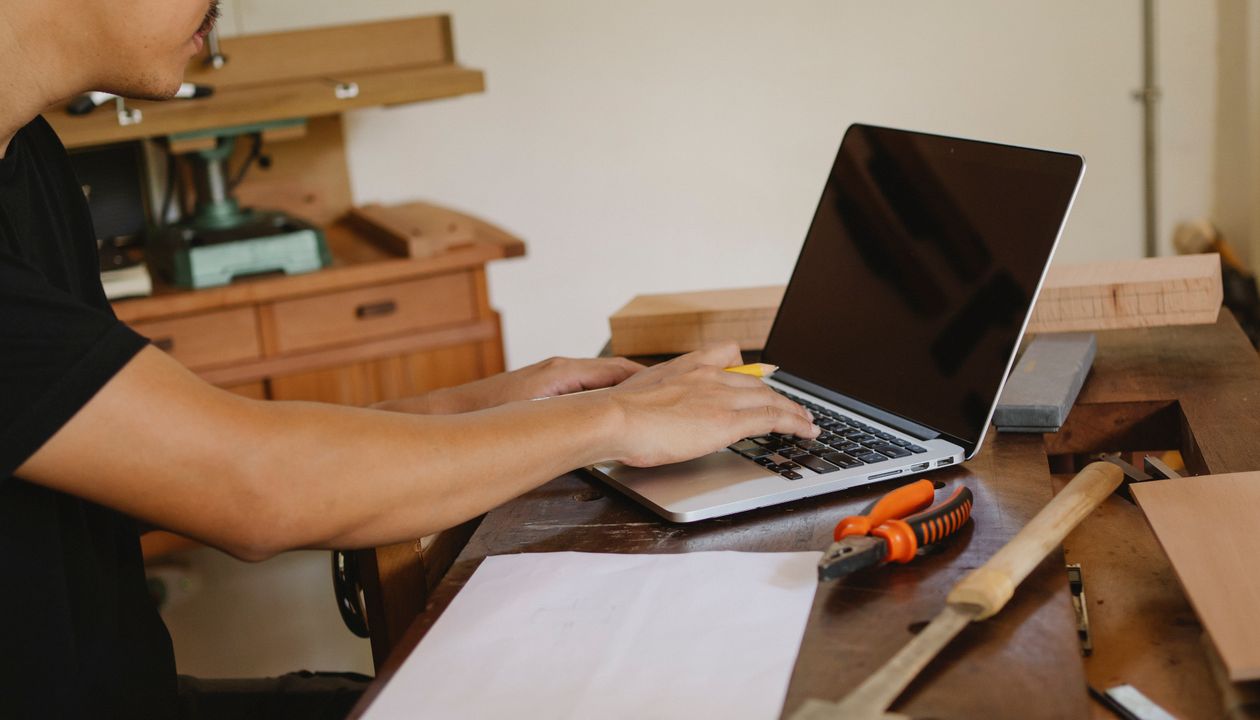
Say a cabinet maker in Frenchtown wins most jobs through word of mouth. That shop mostly needs a clean gallery and a way to call, and a builder handles that well. By contrast, imagine a physical therapy practice in Metuchen that wants online booking, intake forms and careful handling of patient details. That practice is usually better served by a custom build.
Still unsure? Answer four questions. How do customers find you today? What must the site do: inform, book, quote or sell? Who will update it each month? And what’s the plan if you outgrow it?
The Hybrid Route: AI Draft, Human Finish
It isn’t all or nothing. One sensible option is to let AI produce the rough draft, then pay people to finish it. A designer then fixes layout, photos and speed, while a copywriter turns bland text into words that sound like you.
Here’s how that might look for a pet grooming salon in Somerville. The owner uses AI to outline pages for baths, haircuts and nail trims. Next, a copywriter rewrites the About page in the owner’s voice, and a designer swaps stock images for real photos of freshly groomed dogs. Our guide to website copywriting that turns visitors into customers shows what that rewrite involves.
One caution: if the draft lives on a closed platform, confirm your designer can work there. Otherwise, plan to move the content. When you’re ready to hire, our tips on how to choose a web design company in New Jersey cover the questions to ask first.

Pre-Launch Checklist for an AI Website Builder Site
Whichever route you choose, go over this list before customers see the site. A person, not the tool, should sign off on each item.
- Facts: hours, prices, service area, licenses and phone numbers all match reality.
- Sample content: delete placeholder text and any sample reviews or testimonials the template included. Only real customer words belong on your site.
- Search basics: every page has its own title, meta description and one main heading.
- Phone test: pages load quickly on a phone, and your number is tap to call.
- Accessibility: text has strong contrast, images have alt text and forms have labels.
- Forms and booking: send a test from every form and booking page, then confirm it reaches the right inbox or calendar.
- Ownership: the domain is in your name, and you hold the admin logins.
- Privacy: your privacy policy matches what your forms actually collect.
For a page-by-page version, work through our web design checklist for small businesses as well.
Still Weighing an AI Website Builder?
Can I publish the copy an AI website builder writes as is?
Rarely. Treat it as a first draft, then replace generic lines with your real services, towns and process. Just as important, confirm every price, hour and license number before visitors see them.
Can I move my website off a builder later?
Sometimes, but not always cleanly. Check the export options and domain ownership before you build, not after.
Is a builder enough for a brand new business?
Often, yes. If you mainly need to look credible and be easy to reach, a builder site is a fine start. Then revisit it once your leads, services or locations grow.
Get a Website That Fits How You Work
An AI draft is a useful start. Still, a person should check the facts, the speed and the small details that decide whether visitors call. That’s the focus of our custom web design service: mobile-first sites with the search and accessibility groundwork built in.
Samaroo Solutions’ designers work in northern New Jersey, building sites for businesses statewide, from High Point to Cape May. If you have a builder draft and aren’t sure it’s ready, send us the link and your questions. We’ll tell you honestly whether it needs a polish or a rebuild.